
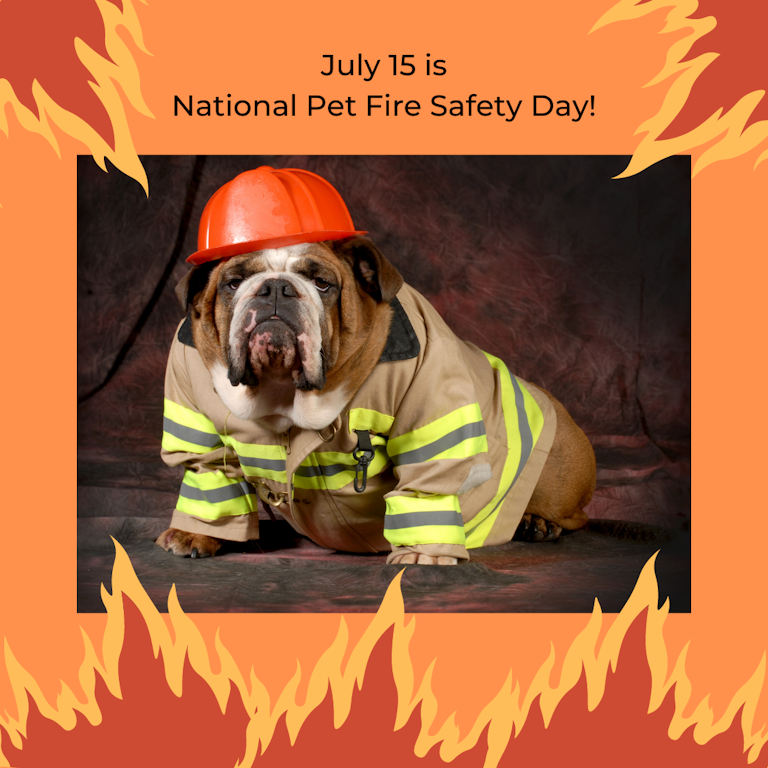
July 15th is National Pet Fire Safety Day. As much as we love our pets, we also know how much their curiosity can get the best of them. According to the National Fire Protection Association, animals are involved in starting nearly 1,000 house fires per year. Whether it is bumping into a stove knob, knocking over a lit candle, or chewing an electrical wire, our fur babies can unintentionally put themselves and our homes in danger. Thankfully, most of these accidents are preventable with some minor changes to your daily routine and lifestyle.
Stove Tops
Stove tops are the number one cause of house fires in the United States. Enticed by the smell of food, pets may jump onto the counter and accidentally nudge a knob, igniting the burner. An easy way to prevent this is to cover the knobs when not in use or remove them altogether. Also, never leave cooking food unattended.
Extinguish Open Flames
Pets are often drawn to lit candles or fireplaces by their warmth or flickering lights. When left unattended, real candles can be easily knocked over by a tail or a paw. Therefore, extinguishing all open flames before leaving a room or the house is crucial. Since battery-operated candles look and smell increasingly realistic, it might be wise to switch to flameless alternatives entirely. If you have a traditional fireplace, always use a secure screen and never leave your pet alone while the fire is lit.
Pet-Proofing
Pet-proofing your home goes a long way in preventing hazards. Make it a habit to tuck away loose wires and unplug appliances when they are not in use. When you are not home, it is best to keep young puppies or kittens confined to a safe area away from any potential hazards. Additionally, securing pets near an exit or on the first floor helps firefighters reach them more quickly in an emergency.
Proper Identification
Make sure your pets wear collars and tags with your current contact information. For more permanent identification, microchipping is a great way to protect your pet.
Placing a pet alert window sticker by the front entrance, noting the number and type of pets inside, can help firefighters know whom to look out for. This crucial information saves rescuers time when locating your pets. Identifying your veterinarian on the window sticker and tags also helps your pet get the veterinary care they need faster in these situations.
For Exotics
Heat lamps and equipment are essential for many exotic pets, whether for a reptile basking area or to keep newborn chicks warm. Because these lamps must run continuously, investing in high-quality equipment is critical. Low-quality fixtures are prone to electrical issues and overheating. Secure all lamps tightly, ensure the area is properly ventilated, and keep fixtures well away from bedding, paper, curtains, or anything flammable. Routinely inspect cords to ensure they are not damaged or frayed.
Family Emergency Plan
Most households already have an emergency plan, but not all of them include pets. Practice your escape routes and plans with your whole family in preparation for a fire or other emergencies. Include your pets by identifying their favorite hiding or napping spots and practice putting them in carriers, so they do not run from you in an emergency. Keep your leashes and carriers by the exits so you can grab them quickly on your way out. Make sure everyone in the household is aware of the plan that way they know what to do and where to go.
Most importantly: If the fire alarm sounds, get out as quickly as possible and never go back inside. Immediately inform arriving firefighters if anyone or any pets are still trapped in the home.
If you have any questions regarding fire safety and your pet, please contact Hill & Harbour Veterinary Center at (401) 398-7807. We know how important your pets are to you. Protecting your furry companions starts long before a smoke alarm ever sounds.